
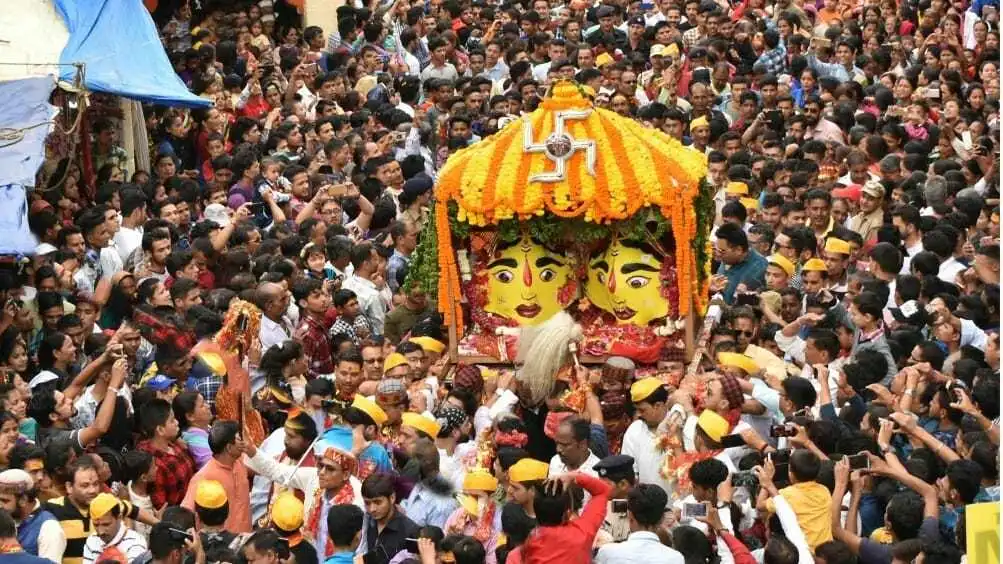
When you think of Uttarakhand, the first images that often come to mind are snow-capped peaks, winding rivers, and peaceful temples tucked into the mountains. But beyond its natural beauty, Uttarakhand shines in the colours of its culture—vivid festivals that fill villages with joy, traditional foods that carry the warmth of the hills, and folk heritage that connects generations through music, dance, and art. Each celebration, dish, and tradition is like a brushstroke on a canvas, painting a story of people who live in harmony with their land and faith.
Colours of Festivals which makes this state more beautiful
Uttarakhand’s festivals are not just dates on a calendar—they are living colours that brighten everyday life in the hills. Each celebration brings with it a unique palette: the fresh greens of Harela that welcome the monsoon, the fragrant blossoms of Phool Dei marking the arrival of spring, the golden hues of Makar Sankranti with its til and jaggery sweets, and the deep spiritual saffron of the Kumbh Mela. Villages come alive with folk songs, vibrant attire, and shared meals that carry the warmth of community. These festivals are more than rituals; they are moments where faith, nature, and togetherness come together, painting Uttarakhand in shades that make the state even more beautiful and alive.
Phool Dei Festival: Spring Festival of Flowers and Prosperity
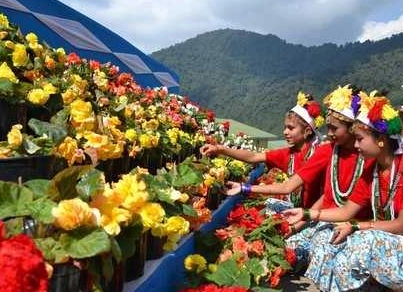
In the hills of Uttarakhand, just as the icy breath of winter begins to fade away, something gentle and magical unfolds—Phool Dei. It’s a festival where laughter and blossoms go hand in hand: little girls rise early, gather wildflowers, rice, jaggery, coconut and leaves, and wander from house to house, placing blooms at thresholds, singing soft folk songs that sound like a promise of spring. With every petal they scatter, there’s hope—for a good harvest, for prosperity, for homes filled with warmth. And when the doors are opened, the blessings and sweets they receive in return feel less like gifts and more like shared joy. Phool Dei isn’t just the start of spring—it’s a thread weaving communities together, reminding everyone of the beauty in simple traditions, the power of nature, and the sweetness of kindness.
Kumbh Mela / Ardh Kumbh: Spiritual hues of saffron, ash, and devotion
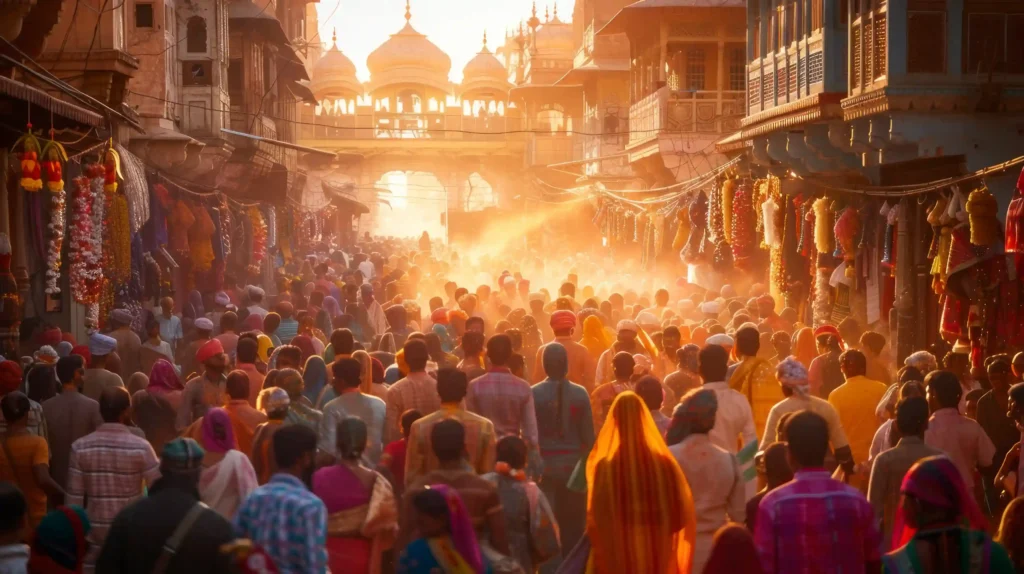
The Kumbh Mela and Ardh Kumbh are not just gatherings—they are rivers of faith flowing through Uttarakhand. Imagine the Ganga shimmering at sunrise, the air thick with chants, the fragrance of incense mingling with the earthy smell of ash worn by ascetics. Saffron-clad saints walk alongside ordinary devotees, all united in their belief that a dip in the holy river washes away lifetimes of burdens. It’s a sight where colours speak louder than words—the saffron robes symbolizing sacrifice, the ash marking detachment, and the countless diyas reflecting hope. To be at the Kumbh in Haridwar is to witness devotion in its purest form, where millions become one in spirit.
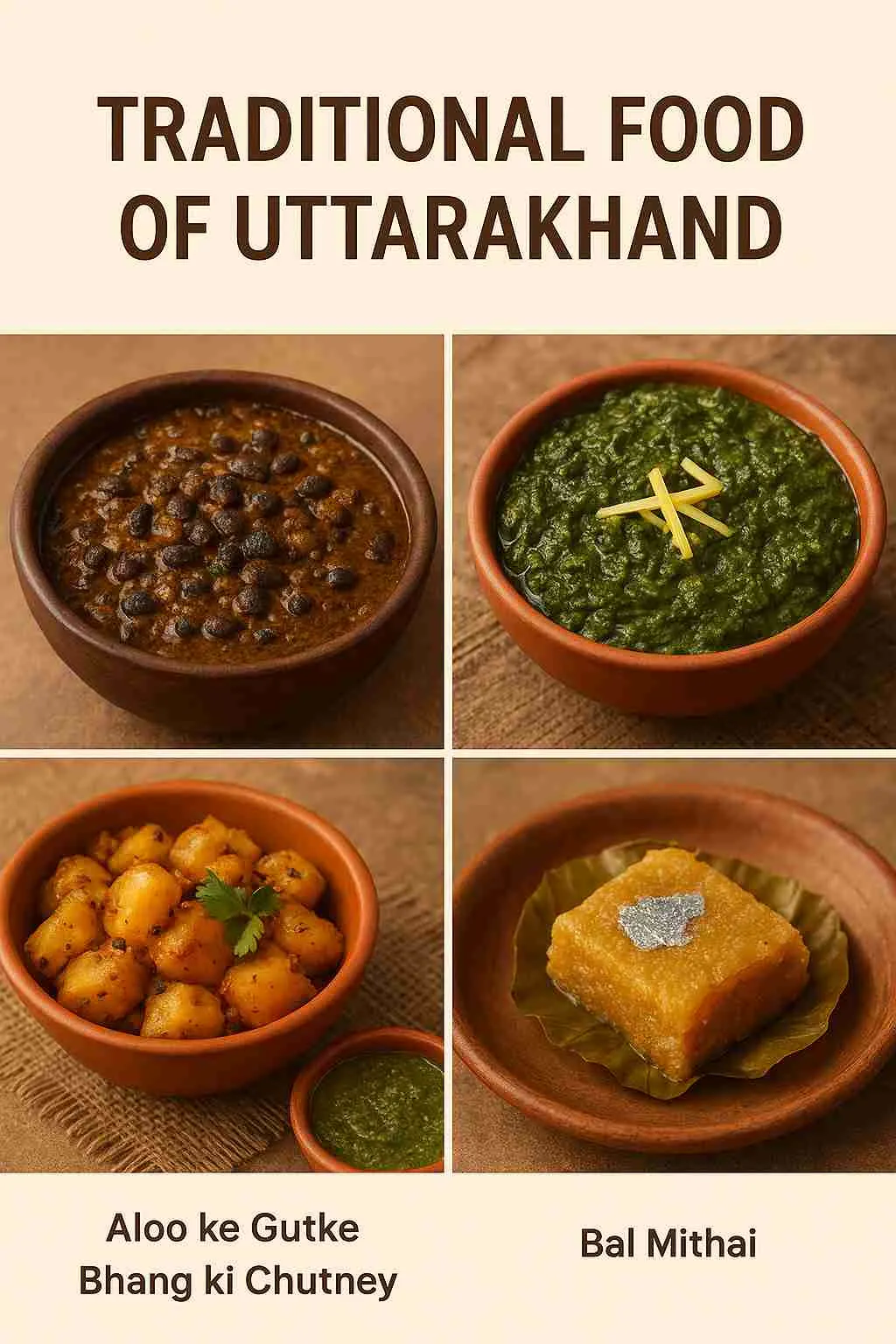
The food of Uttarakhand is a reflection of its mountains—simple, wholesome, and deeply rooted in nature. Every dish carries the aroma of wood-fired kitchens and the love of home-cooked traditions passed down through generations. From the earthy taste of Bhatt ki Churkani (black soybean curry) to the comforting green of Kafuli made with spinach and fenugreek leaves, every bite tells a story of the land. Aloo ke Gutke paired with Bhang ki Chutney brings a burst of tangy flavor, while Chainsoo and Gahat ki Dal speak of the region’s rich pulses and nutrition. And no meal is complete without a touch of sweetness—Bal Mithai and Singori, wrapped in malu leaves, melt in the mouth like memories of childhood. The cuisine of Uttarakhand is not just food; it’s a heartfelt experience—simple yet soulful, humble yet full of flavour, just like the people of the hills.
Folk Culture of Uttarakhand
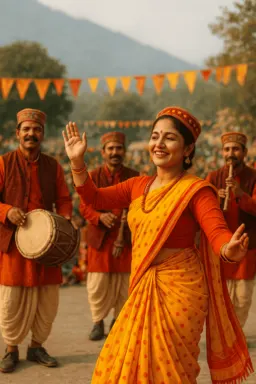
The folk culture of Uttarakhand is the heartbeat of its hills—simple, soulful, and deeply connected to nature. Every melody, dance, and craft tells a story of faith, courage, and everyday life in the mountains. The rhythmic beats of the Dhol and Damau set the stage for vibrant dances like Chholiya, performed during weddings as a symbol of joy and valor. In village courtyards, you can still hear the harmonious tunes of Jhoda and Chanchari, where men and women sway in unity, celebrating love and community. The walls of Kumaoni and Garhwali homes glow with Aipan art, intricate white patterns drawn on red clay, symbolizing prosperity and devotion. From traditional attire like the Pichora—a yellow-red ritual stole worn by women—to heartfelt folk songs sung during harvest or festivals, Uttarakhand’s folk culture is a living legacy—preserved in its people’s voices, steps, and hands.